
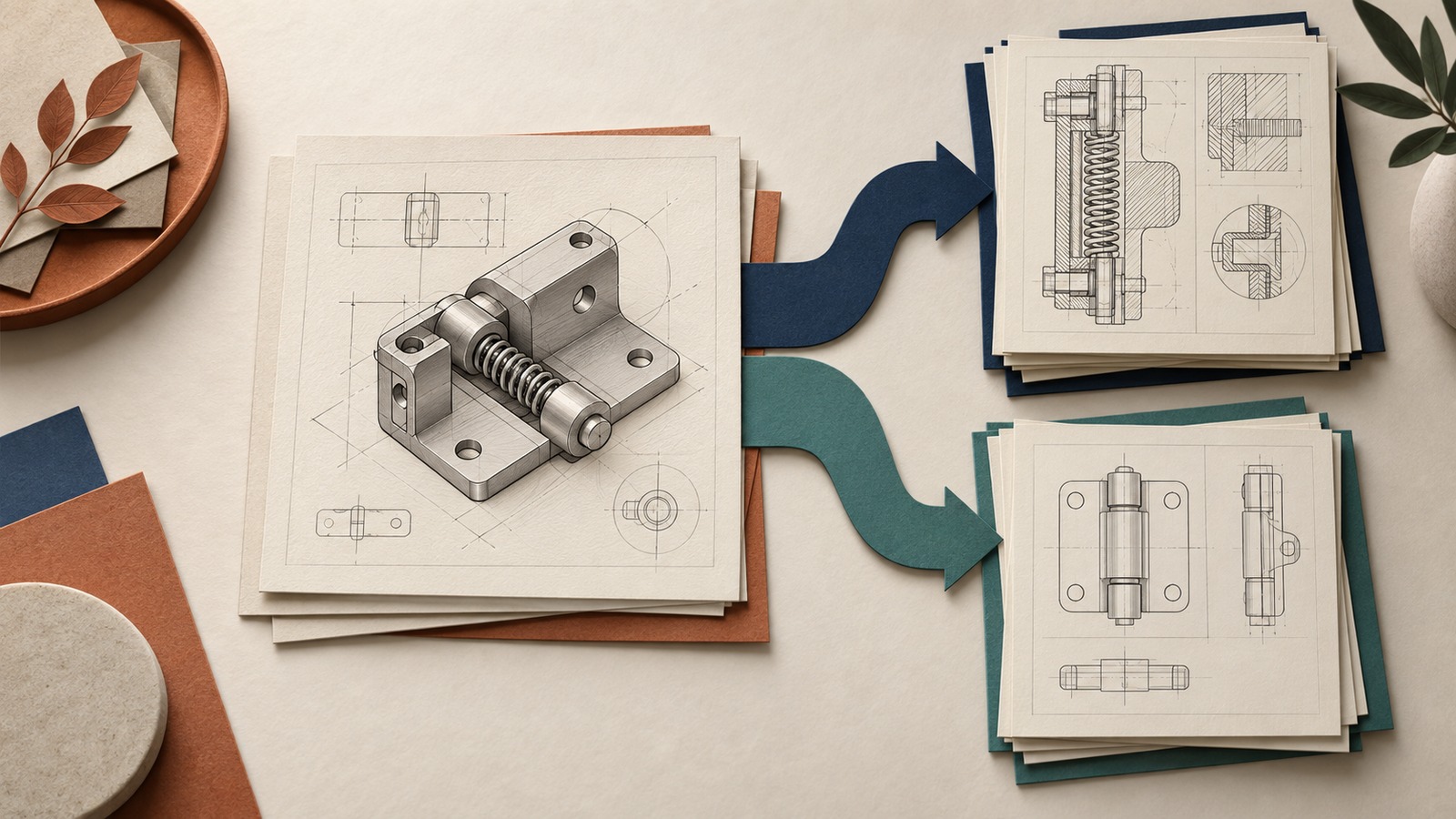
For a U.S. company filing a technical invention in China, the first decision is not simply which route sounds faster. Ask what the claims need to protect. A technical product, process or improvement may fit an invention patent. A utility model is limited to a practical technical solution concerning a product’s shape, structure or their combination; it cannot protect a method. An eligible product structure may warrant a reasoned comparison of both routes. Filing both on the same day is possible under specific rules, but it is not a way to keep two patents indefinitely for identical subject matter.
This guide focuses on the China national filing decision, including the same-day dual-filing rule now applied under the Patent Examination Guidelines effective January 1, 2026. It is separate from deciding how to enter China through a PCT application. Official sources were checked on September 22, 2026.
The short answer: match the claim to the technical contribution
China’s Patent Law, Article 2, defines an invention as a new technical solution for a product, a process or an improvement to either. A utility model is a new and practical technical solution for a product’s shape, structure or their combination. CNIPA’s utility-model explanation makes the operational distinction clear: a utility model protects a product with definite physical form and structure, not a method.
Use that subject-matter test before discussing filing dates or costs. A manufacturing method, control process or chemical preparation method does not become utility-model subject matter merely because a physical product is involved. A hinge, connector or component arrangement may present a structural claim suitable for utility-model analysis, while related method claims may need an invention application. Each claim set needs its own novelty, inventiveness, utility and disclosure review.
Neither route is an automatic grant. Article 22 requires novelty, inventiveness and practical applicability for both. The statutory inventive-step wording differs: an invention must have prominent substantive features and notable progress; a utility model must have substantive features and progress. That difference does not excuse a weak prior-art search or an incomplete disclosure.
Compare examination, term and later evidence
An invention application proceeds through preliminary review and substantive examination. Under Articles 34–40 of the Patent Law, the applicant ordinarily requests substantive examination within three years of filing; missing that step without a justified reason can cause the application to be deemed withdrawn. A utility model is granted after preliminary examination if no ground for rejection is found. That procedural difference is a planning factor, not a promised time to grant or proof that a utility model is valid against later challenge.
The normal statutory terms are 20 years for an invention and 10 years for a utility model, each calculated from the filing date under Article 42, subject to the law’s conditions on continued validity and fees. If enforcement is expected, plan for the evidence differences too: Article 66 permits a court or patent administration authority in a utility-model infringement dispute to request CNIPA’s patent-right evaluation report as evidence. The report is not itself a guarantee of validity or infringement.
For a business team, the practical comparison is therefore: what technical features must be claimed; whether the proposed claims fit the utility-model subject matter; how examination and maintenance fit the product lifecycle; and what evidence may be needed if a dispute arises. Avoid reducing the choice to a generic “fast versus strong” slogan.
What same-day dual filing actually permits
Article 9 of the Patent Law generally allows only one patent right for the identical invention-creation. It creates a conditional path where the same applicant files an invention and a utility-model application for the same invention-creation on the same filing day. If the utility-model right is granted first and is still in force, the applicant may obtain the invention patent by declaring abandonment of the utility model when the invention is ready for grant.
This is two separate applications, not one application with two boxes ticked. Article 47 of the Implementing Regulations requires a declaration in each application at filing that the other application for the identical invention-creation has also been filed. CNIPA’s July 2026 filing-process answer likewise says to submit two application files on the same day and mark the respective declarations in both request forms.
The two filings should be coordinated before submission: applicant identity, technical disclosure, claim strategy, filing date and declarations all matter. A later second filing, a different applicant or an omitted declaration is not safely treated as the same statutory path. A U.S. priority claim, if available, raises additional document and scope questions; priority does not replace the requirement that the two China applications have the same filing day for this mechanism.
The 2026 guideline change makes the exit decision important
CNIPA’s 2025 amendment to the Patent Examination Guidelines took effect on January 1, 2026. Its official explanation says that, for a declared same-day dual-filing case in the specified situation, when the invention application has no remaining ground for rejection, the applicant is notified to abandon the still-effective utility-model right. The amendment removes the former route in that guideline section of obtaining the invention patent by amending its claims to avoid the overlap while retaining the utility model.
Under Article 47, if the applicant declares abandonment within the required period, CNIPA grants the invention and announces the abandonment; the utility-model right ends on the date of the invention-grant announcement. If the applicant refuses, the invention application is rejected; if the applicant does not answer by the deadline, it is deemed withdrawn. CNIPA’s 2026 explanation makes dual filing a portfolio choice that needs an agreed end state, not a presumed route to two lasting rights for the same invention-creation.
The exact treatment of an older or factually unusual pair should be checked against its filing record and the guideline applicable to the pending examination. Do not redesign claim scope after filing on the assumption that amendments can always preserve both rights; Article 33 also prohibits adding matter beyond the original description and claims.
Three practical filing scenarios
A new production process. The claim is directed to steps performed during manufacturing. A utility model cannot protect a method, so assess an invention application and any distinct product-structure claims separately.
A mechanical connector with a defined arrangement of parts. The physical structure may qualify for utility-model subject-matter analysis. Compare an invention route, a utility-model route and, if the same applicant can meet every dual-filing condition, a coordinated same-day pair. The prior art and claims decide whether any route is actually viable.
A product with a technical structure and a novel operating method. Separate the structural and method contributions. A utility-model claim cannot simply be written around the operating method. If both application types are considered, identify which claims overlap and which are genuinely distinct before filing.
These are illustrations of issue spotting, not opinions that any example is patentable or should be double-filed. A product’s visual appearance is a different question addressed in our China design-patent drawings guide.
Build the filing handoff before the Chinese draft
To obtain a scoped China filing recommendation, prepare a nonconfidential handoff first. Include the proposed applicant, whether the invention was made in China or elsewhere, a high-level product or process category, the business objective in China, any existing U.S. or PCT application number, earliest filing and planned public-disclosure dates, and who can approve the filing budget. Do not send full unpublished technical materials until conflict checks, confidentiality terms and the receiving channel are settled.
Once the engagement is ready, the technical team and China counsel can review the detailed disclosure, drawings, claim candidates, inventor and ownership records, prior art, and any priority claim. A China application needs filing documents that adequately support the claims; the Implementing Regulations, Articles 19–20, describe request and specification content. Do not assume a broad U.S. claim or a short product deck can be copied unchanged into a China filing.
For a qualifying first foreign invention or utility-model filing, Article 29 provides a 12-month foreign-priority window for the same subject matter, subject to the legal conditions and required priority steps. It is not a cure for a premature public disclosure. If the substantive content was completed in China and a foreign filing is planned, Article 19 and the Implementing Regulations require a separate confidentiality-review analysis before filing abroad. Our pre-launch disclosure guide treats the publication risk in more detail.
Questions to decide before instructing a dual filing
What is the protectable technical contribution: physical structure, process, product or several distinct contributions?
Are the invention and utility-model claims directed to the same invention-creation, or is the team describing genuinely different subject matter?
Can the same applicant file both complete China applications on the same day and make the declaration in each request?
If the utility model is granted first, what decision process will govern abandonment when the invention is ready for grant?
What are the earliest priority and disclosure dates, and where was the invention substantively completed?
How will official filing fees, translation, search, agency work, examination, maintenance and potential later enforcement costs be scoped separately?
Record the answers with a named decision-maker. The right route depends on the claims and the commercial objective; the mere availability of dual filing is not a reason to choose it.
Frequently asked questions
Can a software or manufacturing method be protected by a utility model in China?
Not as a method claim. Utility-model subject matter is a product’s shape, structure or their combination. A technical solution involving software or a manufacturing process needs claim-by-claim assessment under the invention rules; a physical apparatus may raise a separate structural question.
Does preliminary examination mean a utility model is guaranteed to be valid?
No. A utility model must satisfy statutory requirements, can be challenged after grant, and may require a patent-right evaluation report as evidence in an infringement dispute. Preliminary examination is not the same as a conclusive validity determination.
Can two patents for identical subject matter remain in force after same-day filing?
The Article 9 exception does not authorize two indefinite overlapping rights. Where its conditions are met and the invention is ready for grant, the applicant must declare abandonment of the still-effective utility model to obtain the invention patent; the utility-model right ends when the invention grant is announced.
Is checking one box enough to make a dual filing?
No. CNIPA says two separate applications must be submitted on the same day, with the corresponding declaration in both request forms. Applicant, disclosure and claim coordination also need review.
Is the PCT China national phase the same as same-day dual filing?
No. National-phase entry follows an international application and its own entry requirements. CNIPA’s national-phase FAQ says the applicant selects an invention or utility-model route for the China entry declaration. See our PCT China national-phase handoff checklist for that separate workflow.
Discuss a scoped China patent filing decision
Our China patent services page explains how to start a filing discussion. Send only a nonconfidential summary of the technology category, your China objective, proposed applicant, public application numbers if any, target filing date and approximate budget at first contact. After appropriate conflict and confidentiality steps, the team can review the technical disclosure and compare the invention, utility-model and qualifying dual-filing paths.
Official sources checked September 22, 2026: Patent Law, Implementing Regulations, 2026-effective Patent Examination Guidelines amendment, CNIPA’s amendment explanation, utility-model subject-matter explanation, and CNIPA’s dual-filing process answer.
This article is general information, not legal advice for a specific invention. Eligibility, priority, claim scope, examination, grant, validity and enforcement depend on the actual facts and filings; no outcome or grant date is guaranteed.