
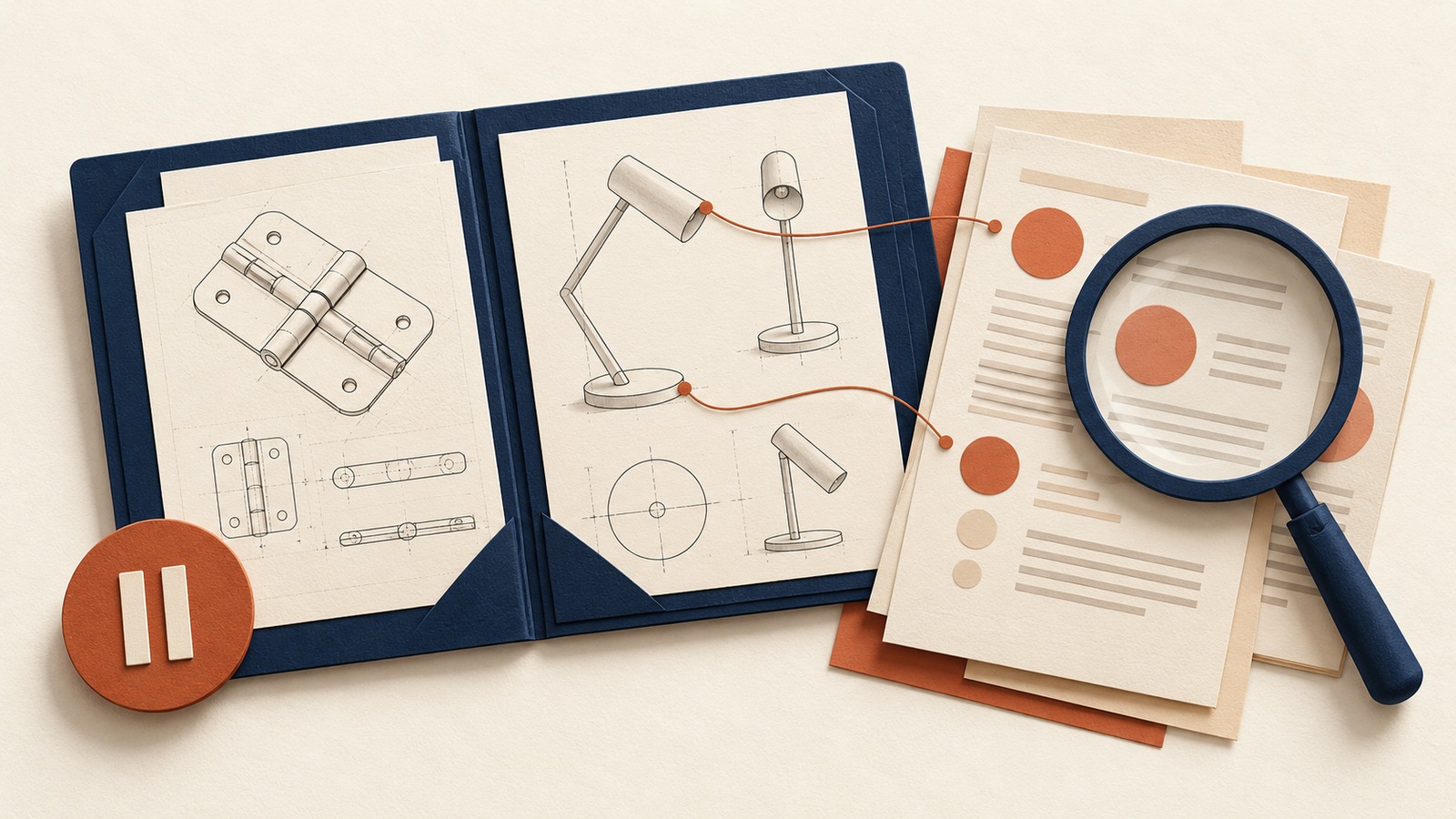
Quick answer: A Chinese patent evaluation report helps assess the grant conditions of a utility model or design patent. A court or patent administration department may require it as evidence in an infringement dispute. It does not decide whether a particular product infringes, and an unfavorable report does not itself invalidate the patent. Before taking action, review the report alongside the current patent record, the protected claims or design, and evidence about the suspected product.
This guide is for overseas businesses and counsel considering protection of a Chinese utility model or design patent. Official sources were checked on October 26, 2026. It addresses mainland China and provides general information, not an opinion on an individual dispute.
What is a Chinese patent evaluation report?
The China National Intellectual Property Administration (CNIPA) prepares a patent evaluation report, or 专利权评价报告, by searching, analyzing, and evaluating whether a utility model or design meets the conditions for grant. CNIPA explains that the report is evidence for infringement proceedings and is not an administrative decision. See its explanation of the report's nature and accessibility.
Article 66 of the PRC Patent Law allows courts and patent administration departments to require the report in utility model or design infringement disputes. The patentee, an interested party, or an accused infringer may also submit one voluntarily. This report mechanism concerns utility models and designs; it is not an invention-patent examination report.
Who can request a report, and when?
Under Rules 62 and 63 of the Patent Law Implementing Regulations, the patentee, an interested party, or an accused infringer may request a report after the grant is announced. An applicant may also request one when completing patent registration formalities. Each request concerns one application or patent.
Do not assume every distributor or business partner qualifies as an interested party. CNIPA's request guidance describes supporting documents for qualifying licensees and accused infringers. Have the requester's status and evidence checked for the particular matter. A foreign business with no habitual residence or business office in China should also check the patent-agency requirement under Article 18 of the Patent Law.
A report is not a confidential private assessment: Rule 63 allows any entity or individual to inspect or copy it. CNIPA issues only one report for the same utility model or design when multiple requesters apply. Check for an existing report before commissioning a request.
Is the report mandatory before every enforcement action?
Article 66 says a court or patent administration department may require it; that wording does not establish a universal precondition for every enforcement route. Check the actual forum's requirements and any notice already issued in your matter. For online complaints, review the platform's current evidence rules separately rather than assuming court rules apply.
The report is one part of an enforcement assessment. Under Article 64, utility model protection is defined by the claims, with the description and drawings used for interpretation. Design protection is based on the design shown in the pictures or photographs, with the brief explanation used for interpretation. A favorable report therefore does not establish that the accused product falls within the protected scope.
For a broader route comparison, see our China IP enforcement guide.
What should you check before using the report?
The following is a practical preparation checklist, not a statutory filing list for every proceeding:
Match the patent. Record the Chinese patent number, patent type, current owner, legal status, and relevant granted documents. Do not substitute a related foreign patent or a product brochure.
Read the complete report. Retain its date, conclusions, cited references, and reasoning. For a utility model, identify which claims each conclusion concerns rather than treating the report as a single pass or fail label.
Separate patentability from infringement. Prepare a product comparison against the relevant claims or protected design. Identify missing views, technical information, or product samples that require further review.
Preserve the conduct evidence. Keep dated listing URLs, seller identity, screenshots, purchase records, and product identifiers where available. Explain which product version each record concerns.
Confirm authority and the route. Check ownership or licensing documents, who may act, the forum's requested materials, and any actual response deadline. Set a budget and business objective before escalating.
For filing context, see Chinese utility model patents and Chinese design patents.
What if the report contains an unfavorable conclusion?
Do not describe the patent as automatically invalid, or ignore the conclusion. The Supreme People's Court's reply on cases involving patent evaluation reports, effective August 1, 2025, states that a court cannot dismiss the action solely because the report considers the patent not to meet grant conditions. The court must address the specific circumstances and adjudicate according to law. This does not guarantee that the claim will succeed.
Invalidation is a separate procedure under Articles 45 and 46 of the Patent Law. As a practical next step, ask counsel to analyze the cited material, the affected claims or design, any existing invalidation proceeding, and the infringement evidence before sending further accusations or spending more on enforcement. If an error in the report is suspected, promptly check the applicable correction procedure and deadline rather than assuming that an ordinary appeal applies.
Common questions
Does a favorable report guarantee a takedown or damages?
No. The report does not resolve product infringement, standing, evidence sufficiency, defenses, or the remedy available in a particular proceeding.
Can an accused infringer request a report?
Yes, the regulations include accused infringers among eligible requesters. Supporting proof of that status still matters; merely being interested in a competitor's patent does not establish the same status.
Can the report replace a freedom-to-operate review?
No. Evaluation of one patent's grant conditions does not clear a product against other parties' patents. A product launch may require a separate review of relevant third-party rights.
Plan the next step with a focused brief
For China IP enforcement support, begin with the public Chinese patent number, your role, the suspected product's public link, your desired outcome, budget, and expected timing. Overseas firms can also use our foreign associate support page.
Do not send complete unpublished technical files at the first contact. Complete conflict checks and agree on confidentiality arrangements or an NDA before sharing sensitive invention material. An initial screening is not a formal legal opinion or a complete infringement, validity, or freedom-to-operate analysis.