
If you find a suspected copy at a trade fair in China, build a complaint that identifies the right, the exhibitor and the specific exhibit. Preserve evidence lawfully, verify the right's current status, and locate the event's IP complaint channel. A complaint can support action during the exhibition, but filing one does not guarantee removal, establish damages or replace a court decision.
Official sources checked October 28, 2026. This is general preparation information; the particular right, event rules and available procedures require case-specific assessment.
Find the complaint channel before you need it
Ask the organizer for the IP complaint desk or workstation, its opening hours, submission method and current forms. Do not assume every exhibition has a dedicated desk. Where none exists, identify the relevant local IP administrative authority and the organizer's published contact arrangements. Rights holders may also complain directly to the relevant IP administrative authority under Articles 6 and 8 of the Measures for the Protection of Intellectual Property Rights at Exhibitions.
For an overseas team, assign a person who can explain the complaint in Chinese and obtain instructions from the rights holder while the show is open. Check the event's requirements for language, document copies and representative authority in advance.
Prepare four groups of complaint materials
Articles 8 and 9 of the Measures address complaint materials and supplementation. Organize the file around:
The right: valid ownership and status documents for the patent, trademark or copyright relied on, together with the rights holder's identity evidence.
The respondent: the exhibitor's identifiable name and other available information connecting it to the display.
The allegation: a concise explanation of the suspected infringement and supporting evidence identifying the relevant exhibit.
The representative: a power of attorney if an agent submits the complaint.
Article 12 of CNIPA's 2022 exhibition IP protection guidance also addresses complaint and authority documents. Ask the actual desk which form and supporting records it needs. Our four-folder arrangement is a preparation suggestion, not a substitute for its requirements.
Connect the evidence to the exhibitor and exhibit
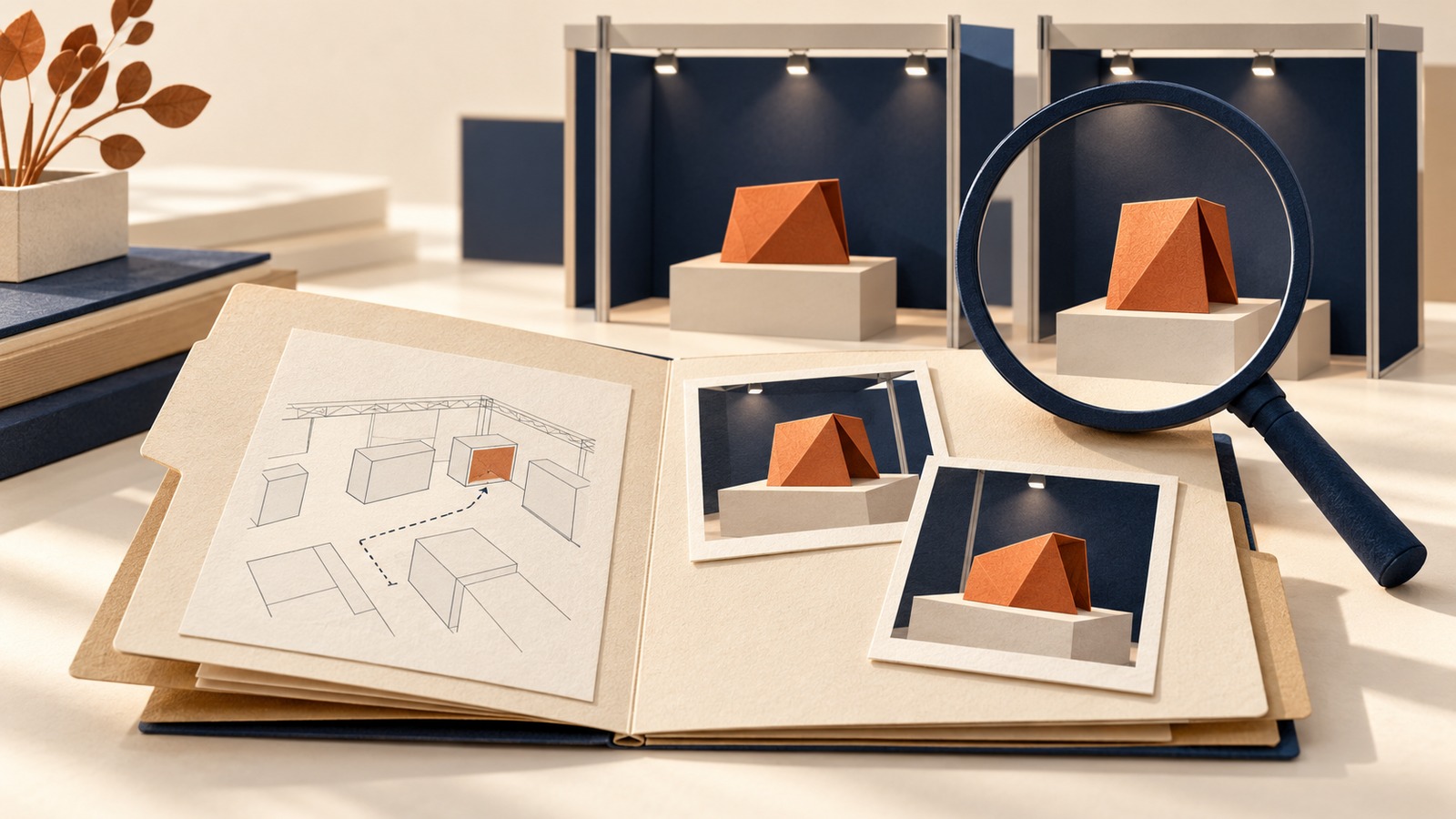
A close-up photograph may show a feature but leave its source unclear. As a practical preparation step, assemble a short evidence index linking the event, hall, booth, exhibitor and product. Record when and where each item was obtained.
Where access and photography are permitted, preserve an overall booth view as well as details of the disputed item, packaging and relevant promotional material. Keep original files, available metadata, catalogs and lawful purchase records. Preserve the URL and capture context for an associated online listing. Keep annotated comparison copies separate from originals.
Explain the particular protected material, trademark or patent features relied on. A visual resemblance alone is not a complete patent analysis. Avoid entering restricted areas, taking property without permission or circulating unverified accusations. If important evidence may disappear, obtain advice about appropriate preservation steps. See our China IP dispute evidence checklist for broader preparation.
Understand the two 24-hour references
Article 11 of the Measures requires the exhibition complaint body to transfer qualifying complaint materials to the relevant IP administrative authority within 24 hours of receiving them. This is a transfer deadline, not a promise that the dispute will be resolved within that period.
Separately, Article 14 of CNIPA's guidance addresses organizer measures where the respondent fails, without a justified reason, to submit a written explanation and evidence within 24 hours after notice, or where infringement has been established by an effective legal instrument or admitted. Measures may include withdrawal or covering of exhibits and removal or blocking of online content. These are conditional provisions; simply submitting a complaint does not ensure immediate removal.
If your own exhibit is challenged
Record the notice time, identify the exact right and exhibit in dispute, and obtain the complaint materials and stated response deadline. Prepare a focused written response with relevant status, authorization, product or source evidence. Keep proof of submission. Do not treat silence as a way to preserve your position, and do not admit infringement merely to make the complaint disappear. Have the underlying allegation assessed promptly.
Plan for issues that outlast the show
Tell the workstation about existing administrative complaints, lawsuits or ownership disputes. Articles 15 and 19 of the guidance address referral and follow-up. Keep the complaint receipt, submitted versions, responses and any recorded handling outcome so the matter can be handed over accurately after the exhibition.
For serious ongoing or imminent harm, assess administrative enforcement, court proceedings and urgent protection separately. Article 6 of the Supreme People's Court's IP conduct-preservation provisions recognizes time-sensitive exhibition infringement as a possible urgency situation. Article 7 still requires assessment of legal and factual grounds, harm, the balance of interests and public interest. Urgency does not by itself secure an injunction.
Arrange a focused China IP handoff
For help planning a China IP enforcement matter, start with the event name and dates, public right numbers where available, the suspected product and the result you need. Include your expected timing and budget. Overseas counsel can use our foreign-associate cooperation channel.
Arrange conflict and confidentiality checks before sending sensitive case files, agreements or technical material. Do not send a complete unpublished invention at first contact. A useful first handoff defines the issue and urgency without exposing more information than is needed.